Thick + Silk
Learn about Silk →Lamination is part of the experience, so the card feels refined instead of simply heavy.
Starting at $138 · 250 cards
Shop this Combination →

A thick business card shouldn't feel like bulk paper. It should feel built — 32, 48, and 64pt multi-board stock, laminated as standard, so the handover carries weight.
From $138 · 250 cards
Lamination is part of the experience, so the card feels refined instead of simply heavy.
Weight plus soft-touch suede: the card feels serious and premium before the design is even read.
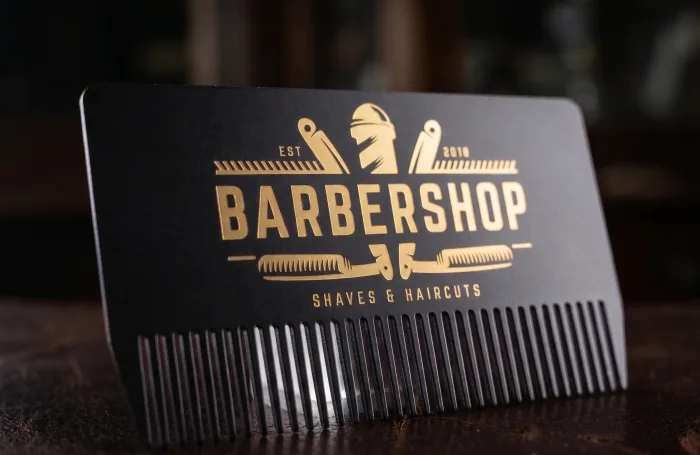
Face-cut the top board to reveal the one beneath — a built reveal only a multi-board card can do, and the truest expression of our architecture. A SilkCards signature.
The thick side profile becomes the fifth face — ink-sprayed or foil-pressed color along the white edge, more brand to turn in the hand.
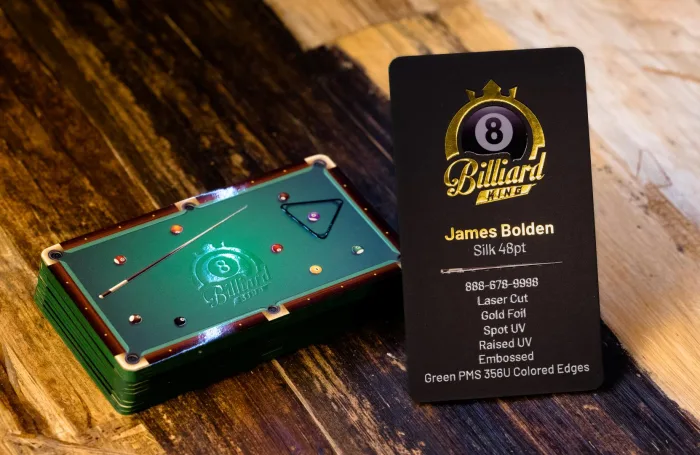
Metallic detail on a heavy base makes the card feel both substantial and finished.
Gloss over matte on a thick card adds a light-catching layer without losing the weight-led seriousness.
Real feedback from trusted professionals who expect more than ordinary business cards.
We've helped brands turn paper, lamination, finish, and edge detail into confidence that makes stronger first impressions.
Get a sample kit and compare the 32pt, 48pt, and 64pt weight in your own hand.
Get guidance on the right combination of stock, thickness, finish, and edge detail.
Flexibility isn’t only the material you print on — it’s how substantial the card feels in the hand. Every stock carries a thickness, measured in points, and the choice is yours: from a 22pt Onyx Black Suede to a full 65pt Wood.
Each stock shown to scale against a US quarter (1.75 mm) for true-to-life thickness.
“I cannot thank this company enough! My business cards are absolutely fabulous and I have received so many compliments on them. The pictures will not do them justice. I got the suede finish, 48 pt thick cards with silver foil on one side and the edges. They are so luxurious.”
The right thickness depends on the role the card needs to play: everyday confidence, unmistakable presence, or maximum statement.
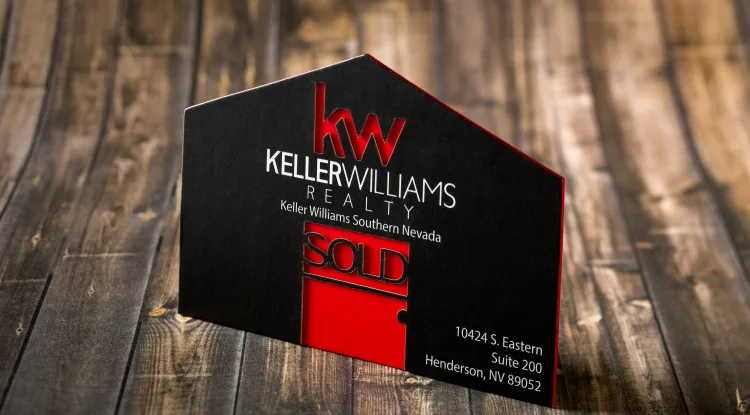
Trust-based sales run on first impressions. A thick card makes the receiver pause — and that pause is the opening, where your brand reads as established, prepared, and worth remembering.
Explore ideas for realtors →A thin card gets read and forgotten. A thick one makes the receiver pause — and that pause is the opening, where your brand reads as established, prepared, and worth remembering.
Not thickness for show. Thickness that makes the card feel permanent, intentional, and worth keeping.
The card is built from 16pt white sheets, so the multi-board edge is visible — ready to be color-edged, foil-edged, or face-cut to reveal the board beneath.
Lamination is part of the experience, so the card feels refined instead of simply heavy.
The first touch tells the receiver this is not ordinary stock from a commodity printer.
Weight is impossible to judge on a screen. The sample kit lets you feel 32pt, 48pt, and 64pt, see the edge profile, and understand why a thick card changes the handoff — and it ships free.
Pair with a SilkCards design consultant and designer — send your logo and let the team recommend the thickness, boards, edge, and finish stack for your brand.
Keep Exploring
The soft-touch laminate that pairs with real weight — serious in the hand, warm to the touch.
Explore SuedeThe smooth matte namesake finish — more polished, less velvet, endlessly versatile.
Explore SilkAbsolute authority and unforgettable weight — maximum perceived value.
Explore Metal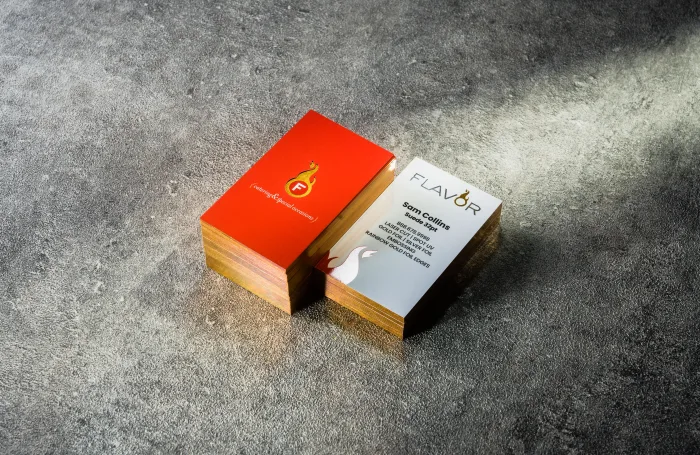
Ready to build, or still deciding? Start with how serious the card should feel — six decisions shape how your thick card reads.
✓ You want a card that feels permanent, intentional, and worth keeping — weight with purpose, not thickness for show.
✓ You want 32, 48, or 64pt multi-board stock, laminated as standard, so the handover carries weight.
✓ You want the multi-board edge visible — ready to be color-edged, foil-edged, or face-cut to reveal the board beneath.
✓ You want the card to feel engineered rather than merely thick — rigid, finished, and visibly built at the edge.
✓ You want the first touch to tell the receiver this is not ordinary stock from a commodity printer.
Best when you want a clear upgrade from standard cards while keeping the card easy to carry, hand out, and reorder.
Extra-thick weight: best when you want the receiver to notice it immediately, without making the card feel oversized or impractical.
Ultra-thick maximum presence: best for statement cards, luxury service brands, founders, designers, and anyone who wants the card to feel unforgettable.
Anyone can claim "thick." The side proves it — turn the card and the boards, the face-cut reveal, and the finished edge are right there.
Because the card is built from bonded boards — not one thick sheet — we can die-cut the top board to expose the one under it. A SilkCards signature.
Most printers go thick with uncoated heavy paper. SilkCards laminates multi-board stock in silk, suede, or cotton — soft-touch and premium at 32, 48, and 64pt.
Three ways to go heavier — and what each one actually feels like in the hand.
| Question | Standard 12pt–14pt card | Single heavy stock | SilkCards multi-board 32–64pt |
|---|---|---|---|
| What the buyer feels | Thin and familiar — easy to overlook. | Thicker, but often still feels like bulk paper. | Rigid, finished, serious, and visibly built at the edge. |
| Best use | Basic contact exchange. | A heavier feel when construction is not the selling point. | Premium first impressions, trust-based sales, luxury service brands, design-forward cards. |
| Construction | One thin sheet, about 12 to 14pt — easy to flex and bend. | One heavy sheet — can feel blunt and still bend. | Bonded white boards — the build that allows the face-cut reveal and Edge Finishes. |
| Surface options | — | Uncoated heavy paper and no other option. | Silk, suede, or cotton laminated over real multi-board weight — soft-touch and premium at 32, 48, and 64pt. |
Thickness is the foundation. The edge is where it becomes unmistakable — a thick, multi-board card carries combinations a thin card can't, and each one has its own page when you want to go deeper.
Face-cut the top board to reveal the one beneath — a built reveal only a multi-board card can do. A SilkCards signature.
The thick side profile becomes the fifth face — ink-sprayed or foil-pressed color along the white edge, more brand to turn in the hand.
Weight plus soft-touch suede: the card feels serious and premium before the design is even read.
Metallic detail on a heavy base makes the card feel both substantial and finished.
Heavy multi-board stock gives embossing and debossing more physical authority — the impression presses deeper and reads more intentional.
Gloss over matte on a thick card adds a light-catching layer without losing the weight-led seriousness.
The essentials most buyers ask before choosing weight — short and to the point.
A standard card runs about 12pt to 14pt. SilkCards thick cards begin at 32pt and rise to 48pt and 64pt — roughly two to four times the standard, built from bonded white boards.
Choose 32pt for an everyday premium card, 48pt for the strongest balance of weight and practicality, and 64pt when maximum presence matters.
Yes. Lamination is standard from 32pt up — Silk or Suede — never an upcharge. It is what makes the multi-board weight feel finished rather than like raw heavy paper.
Yes. Even at 64pt, cards are made to standard business-card dimensions and fit normal holders and wallets — the extra weight is in the thickness, not the footprint.
A standard card runs about 12pt to 14pt — easy to flex and bend. SilkCards thick cards begin at 32pt and rise to 48pt and 64pt, roughly two to four times the standard. Each starts as 16pt white stock bonded into boards, so the hand registers the weight the moment the card is handed over.
Choose 32pt for an everyday premium card, 48pt for the strongest balance of weight and practicality, and 64pt when maximum presence matters. All three are built from bonded white boards. Because weight is impossible to judge on a screen, a free sample kit lets you feel all three in hand before deciding.
SilkCards builds thickness by bonding boards, not by a single heavy sheet. Every card starts as 16pt white stock, then bonds to 32pt, 48pt, or 64pt. That multi-board build gives a rigid card with a clean edge, rather than one floppy sheet of heavy paper. Thickness is measured in points here, not paper weight.
Those terms describe cards well beyond a standard 12pt to 14pt. At SilkCards, that means 48pt or 64pt, both made of three bonded white boards, with 64pt the heaviest standard option. A 64pt card delivers the substantial, can't-ignore weight buyers mean when they search for the thickest possible business card.
Every card starts as 16pt white stock; we bond boards to reach 32pt, 48pt, or 64pt. The core stays white on purpose — so the edge can be color-edged or foil-edged cleanly, and so a face cut can reveal a crisp white board beneath. That face-cut reveal is a SilkCards signature you cannot get from one heavy sheet.
Yes. The thick side profile becomes a surface for Edge Finishes — ink-sprayed or foil-pressed color along the edge. Because the multi-board core is white, the color or foil reads clean and crisp. The thicker the card, the more edge there is to carry the brand, which is why 48pt and 64pt show edges best.
A single heavy sheet can feel blunt and still bend. Bonding white boards builds a rigid card with a clean, visible edge — and that build is what allows the face-cut reveal and Edge Finishes a single sheet cannot show. The card feels engineered rather than merely thick, which is the SilkCards difference.
Yes. A heavy multi-board base actually holds these finishes better than thin stock — foil catches light, embossing presses deeper, and Spot UV adds contrast, all on a card with real weight behind it. Built on bonded white boards, a 32pt to 64pt card gives every finish a solid, rigid surface to sit on.
Point is the trade measure: roughly one point equals one thousandth of an inch. A standard 14pt card is about 0.014 inch. SilkCards thick cards run 32pt (about 0.032 inch), 48pt, and 64pt (about 0.064 inch) — two to four times a standard card, built from bonded white boards.
Yes. Even at 64pt, cards are made to standard business-card dimensions and fit normal holders and wallets. Properly bonded laminated boards stay rigid and hold their shape through everyday pocket use without bending or separating. The extra weight is in the thickness, not the footprint, so it slips into the same slot.
This is the SilkCards advantage: Silk, Suede, and Cotton surfaces over a multi-board 32pt to 64pt build. Most printers offer thickness only on plain uncoated stock. Layering those premium surfaces onto bonded white boards — then adding the face-cut reveal — gives a card most shops simply cannot produce.
Yes. Lamination is standard from 32pt up — Silk or Suede — never an upcharge. It is what makes the multi-board weight feel finished rather than like raw heavy paper. Built on bonded white boards, the laminated surface also gives foil, embossing, and Spot UV a smooth, durable base to land on.
SilkCards has manufactured premium cards since 1997, building thickness through true multi-board construction at 32pt, 48pt, and 64pt from a 16pt white base. That means real weight, a clean color or foil edge, and the signature face-cut reveal — not just heavy paper. A free sample kit lets you feel the build before you order.
Yes. Thickness is one of the hardest details to judge from a screen. A free sample kit lets you feel 32pt, 48pt, and 64pt in hand, see the white-core edge profile, and notice the face-cut reveal before you choose. Most buyers settle their weight decision the moment they hold all three.