
Written by Henry Fan · Founder, SilkCards
29 years turning ink, foil, and pressure into first impressions that don’t get forgotten.
In This Article
- What Gold Foil Business Cards Actually Are
- How Hot Foil Stamping Works: The Die, the Heat, and the Press
- Hot Foil Stamping vs. Digital Sleeking: The Choice You Are Actually Making
- Gold Foil vs. Metallic Ink vs. Metallic Paper: What You Are Comparing
- What You Are Paying For When Gold Foil Costs More
- What Paper Stocks Work With Gold Foil — and Why It Matters
- Finish Combinations: What Gold Foil Stacks With
- Who Uses Gold Foil Business Cards
- What to Put in Gold Foil: Design Principles That Hold Up
- Gold Foil Color Variants Beyond Classic Gold
You have held a business card that did something before you read a single word on it. The light hit the logo from the wrong angle and flared gold. Your thumb moved across the surface before you thought to move it. You were already paying attention — and the person who handed it to you had already won something.
That is the product we are talking about. Not a design choice. A physical event.
What Gold Foil Actually Delivers
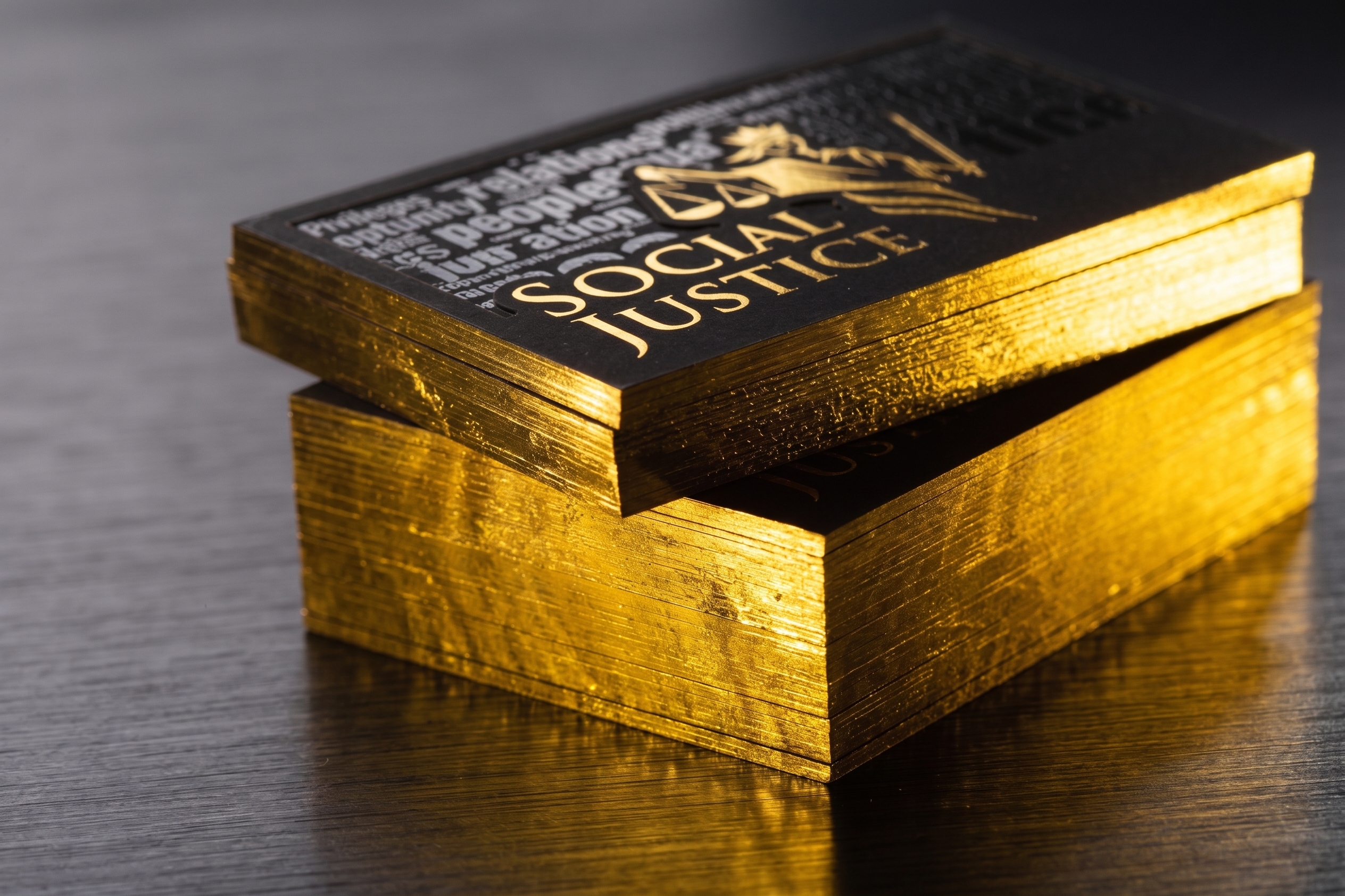
Gold foil business cards are not a category of card stock. They are a category of sensory outcome. The foil does not sit on top of the paper like ink. It bonds to the surface under a combination of heat, pressure, and a die that was machined to carry your specific mark. When it works correctly, the result is not decoration. It is depth — a surface that has been permanently changed in a way that every other production method is trying to approximate.
This article covers what gold foil business cards actually are, how the production process works, what you are comparing when you compare methods and materials, and what the physical object does that a screen-printed or digitally sleeked card does not. By the time you finish reading, you will know exactly what you are ordering — and why it matters that you do.
What Gold Foil Business Cards Actually Are
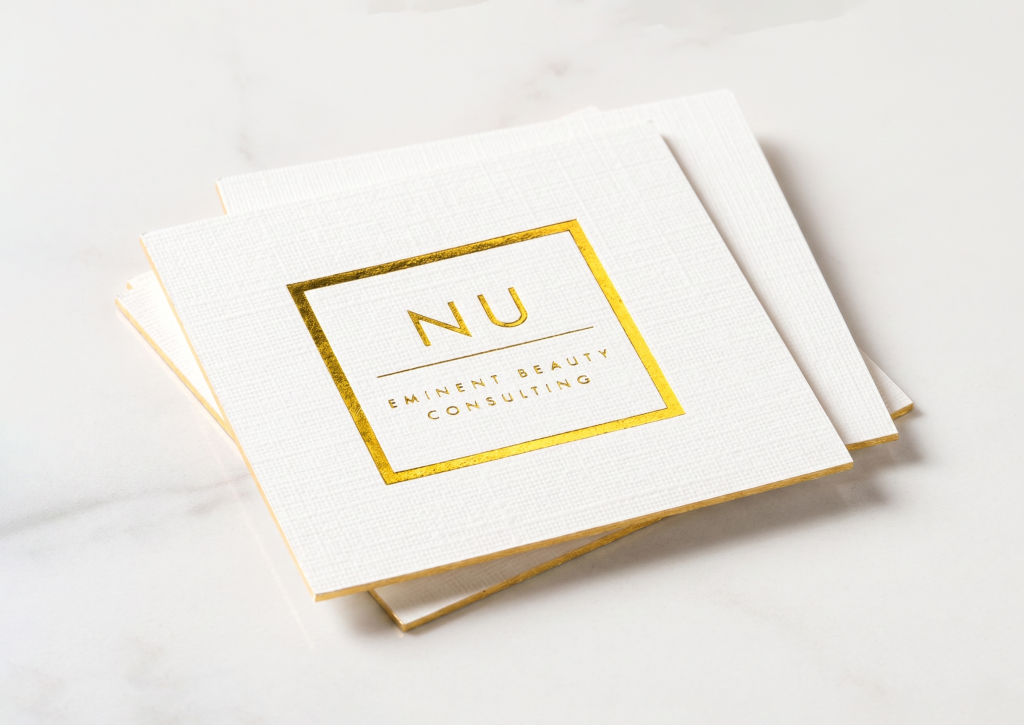
A gold foil business card is a card where a layer of metallic foil — typically a polyester film with a metallic coating — has been applied to the surface using heat and pressure through a process called hot foil stamping. The foil adheres only where the heated die makes contact. Everything outside that contact zone stays as it was.
The result is a design element that is physically different from the rest of the card. The foil has its own reflectivity, its own tactile character, and — depending on finish — its own texture. It does not look like the rest of the card because it is not made of the same material as the rest of the card. It is a different surface that has been bonded to the substrate.
Foil vs. Metallic Color: A Key Distinction
This is the first distinction worth making: gold foil is not a metallic color. It is a metallic material. When you order gold foil, you are ordering a physical layer of foil applied to your card, not a yellow-gold ink or a metallic toner. The visual difference is immediately apparent under light because foil reflects light directionally — it flares and dims as the viewing angle changes. Metallic ink diffuses light. They do not look the same in the hand.
The second distinction: not all gold foil cards are made the same way. There are two primary production methods — hot foil stamping and digital sleeking — and they produce meaningfully different physical objects. Understanding which one you are getting is the single most important thing you can know before you order.
How Hot Foil Stamping Works: The Die, the Heat, and the Press
Hot foil stamping begins with a die — a metal plate machined to the exact shape of the design element being foiled. The die is mounted in a press and heated to a temperature typically between 180°F and 300°F, depending on the foil type and the substrate. A roll of foil film is fed between the die and the card stock. When the press closes, the heated die transfers the foil from the carrier film to the card surface under pressure. The carrier film is then peeled away, leaving the foil bonded to the stock.
The die is what gives hot foil stamping its precision. Because the transfer happens only where the heated die makes contact, the foil follows the exact geometry of the die — clean edges, accurate registration, no bleeding or spreading. A well-machined die on a properly calibrated press produces foil application that holds fine lines, small text, and detailed linework that other foil methods cannot replicate reliably.
Precision, Pressure, and Permanence
The pressure component matters more than most people realize. Hot foil stamping does not just apply foil to a surface — it impresses the surface. Even on a flat-foil run (no embossing), the die contact leaves a slight compression in the stock that you can feel with your fingertip. On a combination foil-and-emboss run, the die stamps the foil down while a counter-die raises the substrate from beneath, producing a relief element that carries both the foil and the dimensional form. This is what separates stamped foil from anything applied by a digital process.
The production implications: hot foil stamping requires die fabrication, which adds setup cost and lead time. It also has design constraints — very thin hairlines (below 0.25pt in most cases) and very small type (below 6pt depending on font) may not hold cleanly in foil. These are real constraints. They are also the constraints that tell you what you are dealing with: a process with physical precision limits, not a digital process with infinite scalability. The constraints are the signal.
Hot Foil Stamping vs. Digital Sleeking: The Choice You Are Actually Making
Digital sleeking (also called digital foiling or cold foiling in some trade contexts) applies foil using a different mechanism: a digital printer lays down a toner-based adhesive in the shape of the foil design, then a laminator bonds a foil film to the adhesive areas using pressure and lower temperature. The foil adheres where the adhesive was printed. No die is required.
The visual output of digital sleeking can look similar to hot foil stamping in a photograph. In the hand, at the right angle, under the right light, a well-executed digital foil card can read as metallic and reflective. But the two objects are not the same.
Physical Differences in the Hand
Here is what is different in the hand:
Edge definition: Hot foil stamping produces edges where the foil ends are crisp — they follow the die geometry exactly. Digital sleeking edges follow the toner boundary, which is subject to dot gain and print spread. At magnification, hot-stamped edges are sharper.
Tactile impression: Hot foil stamping compresses the substrate at the die contact zone. Digital sleeking adds a thin foil layer on top of a toner adhesive layer. The tactile difference is subtle but perceptible — stamped foil sits in the card rather than on it.
Reflectivity: Both methods produce reflective foil. Hot-stamped foil tends to produce a brighter, more consistent mirror surface because the foil is transferred at higher pressure and temperature. Digital sleeking can produce variable reflectivity across a run, particularly in large solid areas.
Durability and Setup Considerations
Durability: Hot-stamped foil, bonded directly to the substrate under heat and pressure, is generally more durable under abrasion and handling. Digitally sleeked foil sits on top of a toner layer and can be more susceptible to edge lifting over time.
Setup economics: Digital sleeking has no die cost. It is better suited for short runs and for designs that change frequently. Hot foil stamping has die cost but lower per-unit cost at volume. For a standard business card run of 250–1,000 cards, the economics often favor hot foil stamping at quality — the die cost amortizes quickly.
Making the Right Choice
The choice is not which method is better. The choice is which object you want. If you want the physical object produced by a centuries-old mechanical process — the object with the compression and the mirror surface and the edge that holds under magnification — that is hot foil stamping. If you want metallic foil on a complex, full-color design without die setup, that is digital sleeking. Both are real products. They are not the same product.
Gold Foil vs. Metallic Ink vs. Metallic Paper: What You Are Comparing
Gold foil is not the only way to get gold onto a business card. Metallic ink and metallic card stock are both real options. Here is what distinguishes them.
Metallic Ink
Metallic inks contain metal flake particles (typically aluminum coated with a colored lacquer to produce gold, silver, or copper appearances) suspended in an ink carrier. When printed offset or digitally, the flakes orient randomly in the ink layer. Light hits the flakes at random angles and scatters. The result reads as metallic to the eye but does not produce the directional, specular reflection of foil. Metallic ink looks like a metallic color. Foil looks like a metallic surface.
Metallic ink is better suited for large areas, gradients, and designs where foil registration or design constraints would be problematic. It is also significantly lower cost. The trade-off is that metallic ink does not produce the same visual impact at normal viewing distance — particularly under variable lighting — that foil produces. They do not behave the same way in the hand.
Metallic Card Stock
Some card substrates — mirror board, brushed metallic stock, pearlescent papers — have metallic finishes built into the paper itself. Printing on these stocks gives the entire card a metallic ground. Design elements are then printed or embossed over this base.
Metallic stock produces a uniform metallic field. It is excellent for certain design aesthetics — minimalist, high-contrast, ultra-modern. But the foil effect (selective, precise, applied to specific design elements) is lost when the entire stock is metallic. Foil on metallic stock can work, but the foil elements must compete with the stock’s existing reflectivity.
The strategic question: do you want gold as a field, as an accent, or as a specific element with precision? Gold foil applied via stamping gives you precision. Metallic stock gives you field. Metallic ink gives you a spectrum between the two.
What You Are Paying For When Gold Foil Costs More
Gold foil business cards cost more than standard business cards. The cost differential is real and the reasons for it are specific.
Die Fabrication
A custom die must be machined for each foil design. The die is a metal plate cut or etched to carry the exact geometry of your foil artwork. Die fabrication is a fixed setup cost — it is the same whether you print 50 cards or 5,000 cards. At low quantities, the die cost represents a high per-unit cost. At higher quantities, it amortizes and the per-unit cost drops substantially.
Foil Material
Foil film is a specialty material — a polyester carrier with a release layer, a color layer (the metallic coating), and an adhesive layer. Standard gloss gold foil is the base. Specialty foils (holographic, brushed, pigmented colors) carry a material premium. The foil itself is a per-use consumable on the press.
Press Time and Setup
Hot foil stamping requires a dedicated press pass — you cannot foil and print in the same pass on most equipment. The card goes through the digital print run, then through the foil stamping press as a separate operation. Each pass requires setup, registration, and quality control. More passes mean more time, more handling, and more potential for reject cards.
What the Premium Buys You
The price premium buys a physical object that cannot be replicated by a cheaper process. It buys a surface that reflects light directionally — that flares when someone tilts it, that goes dark when they move it away. The edges hold under close inspection. That compression artifact — the subtle topographic change where the die met the stock — is something no digital process produces.
When Is Foil Worth the Investment?
For a business card, the relevant question is not “is foil worth it in absolute terms” — that is unanswerable in the abstract. The question is whether the physical signal of the card matters to the people who receive it. In most professional contexts — finance, law, luxury goods, high-end creative services — it does. The card is a first impression delivered as a physical object. The foil is part of that first impression in a way that no other finish element is.
The foil-and-stock combination you choose is the card you carry.
SilkCards’ online configurator lets you select foil coverage, stock weight, finish layers, and quantity — and confirms which combinations are available for hot-stamp production versus digital sleeking. You can build your exact specification before committing to an order.
Every order that specifies hot foil stamping goes through our in-house stamping department, where the die is checked, the press is calibrated to your stock, and a press proof is pulled before the run starts. You receive a physical confirmation of what the foil looks like on your specific stock before we print the full quantity.
What Paper Stocks Work With Gold Foil — and Why It Matters
Not every card stock accepts hot foil stamping equally. The substrate’s surface characteristics — texture, coating, thickness, moisture content — all affect how well the foil adheres and how clean the transfer is. Understanding what stocks work best is not a peripheral concern; it is central to the finished quality of the card.
Smooth-Coated Stocks
Smooth, coated stocks — gloss art, silk, and matte-coated boards — are the most predictable substrates for foil stamping. The even surface gives the die clean contact across the foil area, producing consistent adhesion and sharp edges. Most of SilkCards’ standard Foil Business Cards use smooth-coated or specialty coated stocks for this reason.
Textured and Uncoated Stocks
Textured stocks (linen, laid, cotton) and uncoated boards can accept foil, but require more careful die calibration. The texture can cause the foil to bridge across valleys in the stock surface rather than bonding into them, which shows as a slightly uneven foil surface — visible under close inspection. For some aesthetic purposes, this is acceptable or even desirable. For precision technical foiling, smooth stocks are preferred.
SilkCards’ 32pt suede / cardstock — the 32pt heavyweight option — accepts foil stamping very well. The thickness provides rigidity during the press pass, which improves registration accuracy. The suede coating provides a consistent surface for foil adhesion while creating a distinct tactile contrast between the matte suede field and the mirror-gold foil elements.
Dark vs. Light Stocks
Gold foil reads differently on dark and light substrates. On a light or white stock, gold foil elements stand out primarily by reflectivity — the gold flares against the white. On a dark stock — black, deep navy, dark forest green — gold foil elements stand out by both reflectivity and value contrast. The gold-on-black combination in particular produces the most dramatic visual effect of any foil configuration. It is the combination most associated with luxury positioning.
The substrate choice is part of the design decision, not separate from it. The same foil element on a white stock and on a black stock are not the same card. They produce different effects, different moods, and different signals about the brand.
Finish Combinations: What Gold Foil Stacks With
Gold foil is rarely the only finish element on a high-end card. It is most commonly part of a finish stack — a combination of processes that each contribute a distinct sensory layer. Understanding what foil stacks with — and what it conflicts with — is part of making a card that works as a whole object.
Foil + Matte Laminate
Matte laminate on the card body with gold foil elements is the most common foil combination for a reason. The matte finish absorbs light; the foil reflects it. The contrast between the two surfaces is what makes both more visible. A card with matte laminate and gold foil accents looks like it was designed to produce that specific contrast — because it was. This is the baseline combination for luxury positioning.
Foil + Soft Touch Laminate
Soft touch laminate (also called velvet or suede laminate) produces the most extreme tactile contrast with foil. The coating feels like dry velvet — almost grippy. Gold foil against a soft touch background produces a sensation that is equally visual and tactile. Your eye sees the contrast; your fingertip feels it. This is the finish combination that generates the most consistent comment from people handling the card for the first time.
Foil + Embossing
Foil and embossing can be combined in a single die pass — foil embossing. The die stamps down with the foil, and a counter-die raises the substrate from beneath simultaneously. The result is a raised foil element — gold that catches light from above and casts a shadow below. This is technically demanding (the foil must transfer cleanly during embossing without cracking or lifting at the edges) and produces a card element that is unlike anything achievable by a non-mechanical process.
Foil + Spot UV
Combining foil with spot UV coating creates a card with two competing reflective elements — the mirror foil and the gloss UV. This combination works well when the foil and UV are applied to different design zones. Applying both to the same area tends to muddy both effects. The future-spoke article on foil + spot UV combinations will cover this configuration in detail.
Foil + Edge Painting
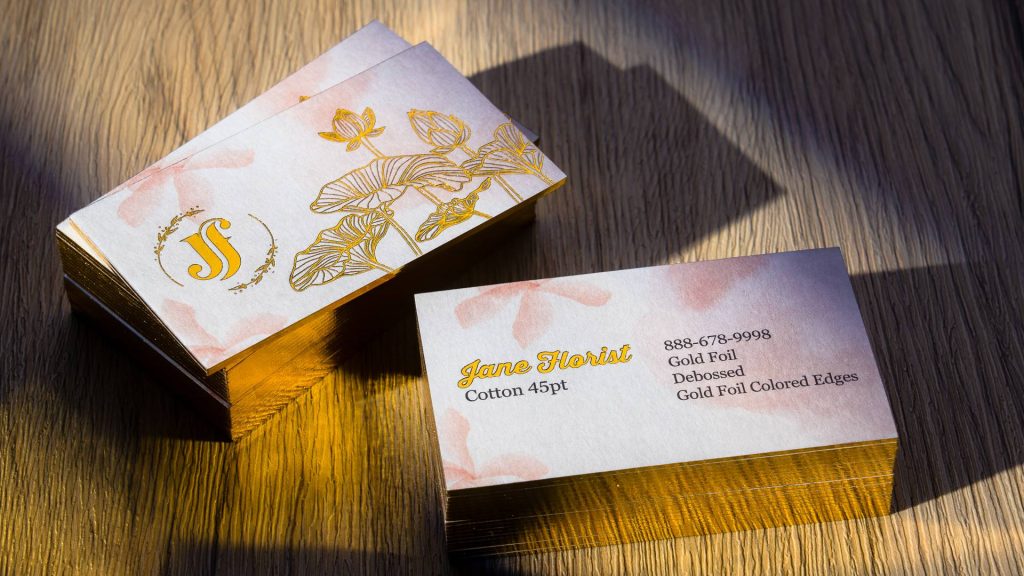
Edge-painted cards with gold foil faces produce a complete metallic frame effect — gold on the front face, gold on the card edge. This is currently one of the most requested luxury configurations in SilkCards’ production queue. The edge paint and the foil should be specified together because the stock weight and rigidity requirements for edge painting overlap with the rigidity requirements for clean foil stamping.
Who Uses Gold Foil Business Cards
Gold foil business cards are used across a wider range of professional contexts than most people expect. The association with luxury is accurate but incomplete — foil is used not just by luxury brands but by anyone whose professional positioning benefits from a card that reads as premium, precise, and serious.
Financial Services and Law
Private wealth managers, investment bankers, and senior attorneys were among the earliest professional adopters of hot-stamped foil business cards. The reasoning is straightforward: clients of these professionals are accustomed to quality materials. A card that reads as cheap communicates something about how you manage details. A card with hot-stamped gold foil communicates the opposite.
Luxury Real Estate
High-end real estate agents and brokers use foil cards as part of a broader positioning strategy around luxury property sales. The card is one of many signals the agent controls in a client interaction — the office environment, the presentation materials, the car. The card is the cheapest signal to upgrade and the most frequently exchanged. Luxury real estate business cards with gold foil are now the expected standard in many top-tier markets.
Creative and Design Professionals
Photographers, brand designers, architects, and interior designers use gold foil cards as direct evidence of their craft attention. If you are selling expertise in visual communication and material quality, your card is a portfolio piece. It communicates what you care about before you say a word about it.
Executive and C-Suite
Senior executives at mid-to-large organizations increasingly use foil cards as a personal brand signal that extends beyond the corporate standard. The company card is what HR or marketing provides. The personal card — the one used at industry events, client dinners, and board interactions — is often something different. Foil is a common choice because it reads as personal, considered, and not mass-produced.
Luxury Consumer Brands
Fashion, hospitality, jewelry, and beauty brands use foil cards as brand expression materials — cards distributed to partners, press, and retail staff that carry the brand aesthetic into every physical touchpoint. For these brands, the card is a brand artifact. The foil is not an upgrade; it is the specification.
What to Put in Gold Foil: Design Principles That Hold Up
The most common design error with gold foil is applying it to too much of the card. Foil works because it is selective — it draws attention to the specific element it covers. When foil covers most of the card, it loses selectivity and the effect diminishes. The design principles below are not stylistic preferences; they are observations about what holds up in the hand under real viewing conditions.
Logo Mark, Not the Whole Logo
If your logo consists of an icon and a logotype (text), foil the icon and print the text conventionally. The icon is the element that benefits most from the foil — it is the visual anchor, the thing that registers fastest, the element that carries the most brand identity weight. The logotype text is legibility infrastructure. Foiling both divides the visual attention and over-spends the contrast budget.
Minimum Viable Foil Coverage
A useful heuristic: foil should cover no more than 20–30% of the card face. Below that threshold, foil elements read as premium accents — deliberate, specific, considered. Above it, the foil field starts to compete with everything else on the card and the individual impact of the foil is reduced. This is not a hard rule, but it is a calibration point.
Foil Where the Eye Goes First
Foil goes where you want the card recipient’s eye to go first — and stay for a moment. That is typically the logo, or the name on a personal card. It is not the address block, the tagline, or the website URL. Those elements are support infrastructure. Reserve foil for the hierarchy level that deserves the strongest visual weight.
Font Size and Line Weight
For foiled text, maintain a minimum font size of 8pt and avoid hairline strokes below 0.25pt. These are not hard limits — some fonts at 7pt will hold cleanly in certain foil and stock combinations — but they are the conservative safe zone. Your designer or our custom business card design service can review your artwork and flag anything that may not transfer cleanly before die fabrication begins.
Contrast Is the Mechanism
The visual impact of foil depends on contrast — between the foil surface and the card body. Matte laminate and soft touch finishes maximize this contrast. Gloss laminate on a white stock provides less contrast because the gloss field and the foil field are both reflective. Design the card around the contrast, not just around the foil element.
Gold Foil Color Variants Beyond Classic Gold
“Gold foil” is commonly used as a shorthand for hot foil stamping generally, but the foil film category includes a substantial range of metallic colors and finishes. Each produces a distinct visual character in the hand.
Classic Gold
Classic gold foil (sometimes called “bright gold” or “mirror gold”) produces a warm, high-luster, yellow-gold surface. It is the most versatile gold variant across stock colors — it reads well on white, cream, kraft, and black stocks. It is the default specification for “gold foil business cards” in most production contexts.
Matte Gold
Matte gold foil produces a warm gold color without the mirror luster. The surface diffuses light rather than reflecting it directionally. On a matte laminated card, matte gold foil provides less contrast than mirror gold — the foil and the card face have similar surface characters. On a gloss card, matte gold can read as subtle and refined rather than dramatic. It is a different positioning signal than mirror gold.
Rose Gold
Rose gold foil — a pinkish-gold with warm copper undertones — has grown substantially in adoption since the mid-2010s alongside the rose gold consumer electronics trend. It reads as contemporary and distinctly feminine in most cultural contexts, though this is shifting as the color establishes a broader brand vocabulary. Rose gold on black stock is one of the most distinctive foil combinations currently in production. (Dedicated rose gold foil article forthcoming.)
Silver Foil
Silver foil produces a cool, neutral metallic that reads as contemporary and minimal where gold reads as warm and traditional. The choice between gold and silver is partly a color decision and partly a positioning decision — gold carries more traditional luxury connotations; silver carries more modern, technological, and minimal connotations. Silver foil on a white card is near-invisible; silver foil on black stock is maximally contrasted. (Dedicated silver foil article forthcoming.)
Copper Foil
Copper foil has a warm reddish-orange metallic character that sits between gold and red in the visual spectrum. It has strong associations with craft, artisanal production, and the contemporary natural materials trend. On kraft stock or uncoated boards, copper foil can produce a distinctly artisan aesthetic. On dark coated stock, it reads as bold and unconventional. (Dedicated copper foil article forthcoming.)
Holographic Foil
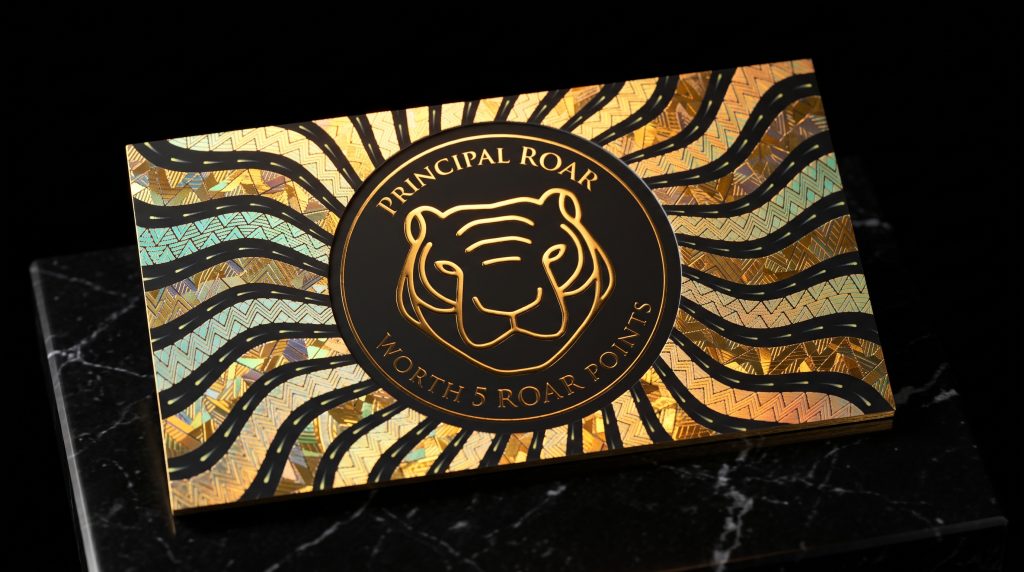
Holographic foil (also called prismatic or rainbow foil) diffracts light across the visible spectrum as the viewing angle changes. It is the highest-drama foil option and the most attention-demanding. It is well-suited for contexts where the card itself is meant to be a novelty or conversation piece. In contexts where understated prestige is the goal, holographic foil is too aggressive — it calls attention to itself rather than to the brand. (Dedicated holographic foil article forthcoming.)
What Customers Report Holding the Finished Card
“I can confidently say I’ll never go back to using traditional business cards.”
— Verified Trustpilot Reviewer, SilkCards
That recognition moment — when the card leaves your hand and the recipient pauses — is not accidental. It is the result of a physical object that moves the bar for what a card can communicate. Once you have handed out a card that produces that pause, going back to a standard offset card feels like choosing to be forgettable.
Frequently Asked Questions
What is the difference between hot foil stamping and digital sleeking?
Hot foil stamping uses a heated metal die and a press to transfer metallic foil directly to card stock under heat and pressure. Digital sleeking prints a toner-based adhesive digitally and then laminates foil film over the adhesive areas at lower temperature. Hot foil stamping produces sharper edges, a deeper tactile impression, and generally higher durability. Digital sleeking requires no die fabrication and handles complex designs more easily. The physical objects they produce are different in the hand.
How thick should a business card be for gold foil stamping?
Gold foil stamping works across a range of card weights, but heavier stocks perform better because they provide more rigidity during the press pass, improving registration accuracy. SilkCards’ standard foil business cards start at 16pt and the most popular configuration for foil is 32pt. At 32pt, the stock is rigid enough that it does not flex during stamping, which keeps the die contact even and the foil transfer consistent.
Can gold foil be applied to both sides of a business card?
Yes. Double-sided foil is technically possible and SilkCards produces it regularly. Each side requires a separate press pass and its own die. The practical constraint is design: on a standard business card, the back side is typically contact information or a simple design field. Foiling both sides is most effective when both sides have distinct design elements that benefit from foil — for example, a foil logo on the front and a foil monogram or pattern on the back.
What card finishes work best with gold foil?
Matte laminate and soft touch laminate produce the highest contrast with gold foil because they absorb light while the foil reflects it. This contrast is what makes foil elements visually dominant on a matte field. Gloss laminate over the full card reduces this contrast because the gloss coating is itself reflective. The most dramatic combinations are: soft touch + gold foil (maximum tactile contrast), matte laminate + gold foil (maximum visual contrast at low cost), and matte + gold foil + spot UV (three-layer finish stack for maximum sensory differentiation).
How do I design artwork for gold foil stamping?
Foil artwork should be set up as a separate layer or plate in your design file — typically a spot color layer labeled “FOIL” in the file sent to production. Minimum recommended font size for foiled text is 8pt; minimum stroke weight is 0.25pt. Reversed fine type (foil background with cutout letters) should use heavier fonts because the letter counters (interior spaces) can fill in if the counters are too small. SilkCards provides a dieline template and artwork specification sheet with every foil order.
Is gold foil durable on a business card?
Hot-stamped gold foil is highly durable under normal handling. The foil is bonded to the stock under heat and pressure — it does not peel or flake under ordinary use. The most common durability concern with foil cards is edge wear on the foil boundary under repeated handling, but on a properly produced card with a quality foil and a clean die transfer, this is not a practical issue for the typical lifespan of a business card. Foil over an unlaminated surface is somewhat more vulnerable; foil over a laminated surface is more protected.
What is the minimum order quantity for gold foil business cards?
SilkCards’ minimum order for foil business cards is 50 cards. Because hot foil stamping involves die fabrication as a setup cost, the per-unit cost at very low quantities (50–100 cards) is higher than at standard quantities (250–1,000 cards). The die fabrication cost does not change with quantity — it is a fixed setup cost amortized across the run. At 250 cards, the die cost is effectively absorbed into the per-unit price. SilkCards can advise on quantity economics for your specific foil configuration.
Can I get a sample of gold foil business cards before ordering?
Yes. SilkCards offers a free sample pack that includes examples of hot-stamped gold foil on multiple stock and finish combinations — including the soft touch, matte laminate, and 32pt suede options. The sample pack lets you hold the actual foil and stock combinations before committing to an order. Request the sample pack at silkcards.com/pages/sample-request.
The Card as a First Impression
The hand already knows. Before the eye reads the name, before the mind processes the title, the fingertip has already formed an opinion. Gold foil business cards are built for that opinion. They are built for the moment before the conversation — the moment when the card is doing the talking. Get the process right, get the stock right, get the design right, and the card does its job before you say a word.
When you are ready to build yours, start with the configurator — select your stock, your foil, your finish stack — and our team will confirm your specification is set up for clean stamping production. If you want to hold the materials first, request a sample pack and we will send you the foil and stock combinations worth considering. And if you want design guidance for a card that makes the most of what foil can do, our custom business card design service is there.