
The Real Estate Business Card That Stays After You Leave
You leave the listing appointment. The handshake was warm. The walkthrough went well. You feel good about it. The sellers walk you to the door, thank you, close it behind you — and now, every impression you can still make depends on the real estate business cards you left on the kitchen counter.
And now the only thing left in their house that speaks for you is a card on the kitchen counter.
So is every other agent’s.
Two hours later, when the sellers sit down at that counter with a glass of wine and start sorting through the cards they’ve collected this week — whose card is still face-up? Whose card has already been slid into the junk drawer?
That is the question this article answers. Not how to design a real estate business card. Not what to put on it. The deeper question: what makes a card survive the counter, the wallet, the drawer — and stay connected to the agent who handed it over?
The answer is not the design on the front. It is what the card is made of. SilkCards has been building the cards serious real estate professionals hand over since 1997 — and the difference begins before the first word is read. It begins with what the card weighs and how it feels when it lands in your client’s hand.
What Goes on a Real Estate Business Card
First, a realtor’s card has one job before the design begins: give the client a way to reach you, verify the license, and show the brokerage.
The required fields are non-negotiable — full legal name, direct phone number, professional email, brokerage name and logo, and real estate license number (required on real estate marketing material in many states). A headshot and a one-line market specialty (“Lake Minnetonka · waterfront”) are optional but often used.
Every realtor prints these fields. Every card sitting on that kitchen counter belongs to an agent the seller is still deciding between — and yours is one of them. The difference between your card and the others is not what the card says. It is what the card is.
Where Real Estate Business Cards Actually Live
Most business card articles treat the handover as the final scene. It is not. The handover is the beginning of the card’s real life.
For a real estate business card, that life happens in three places:
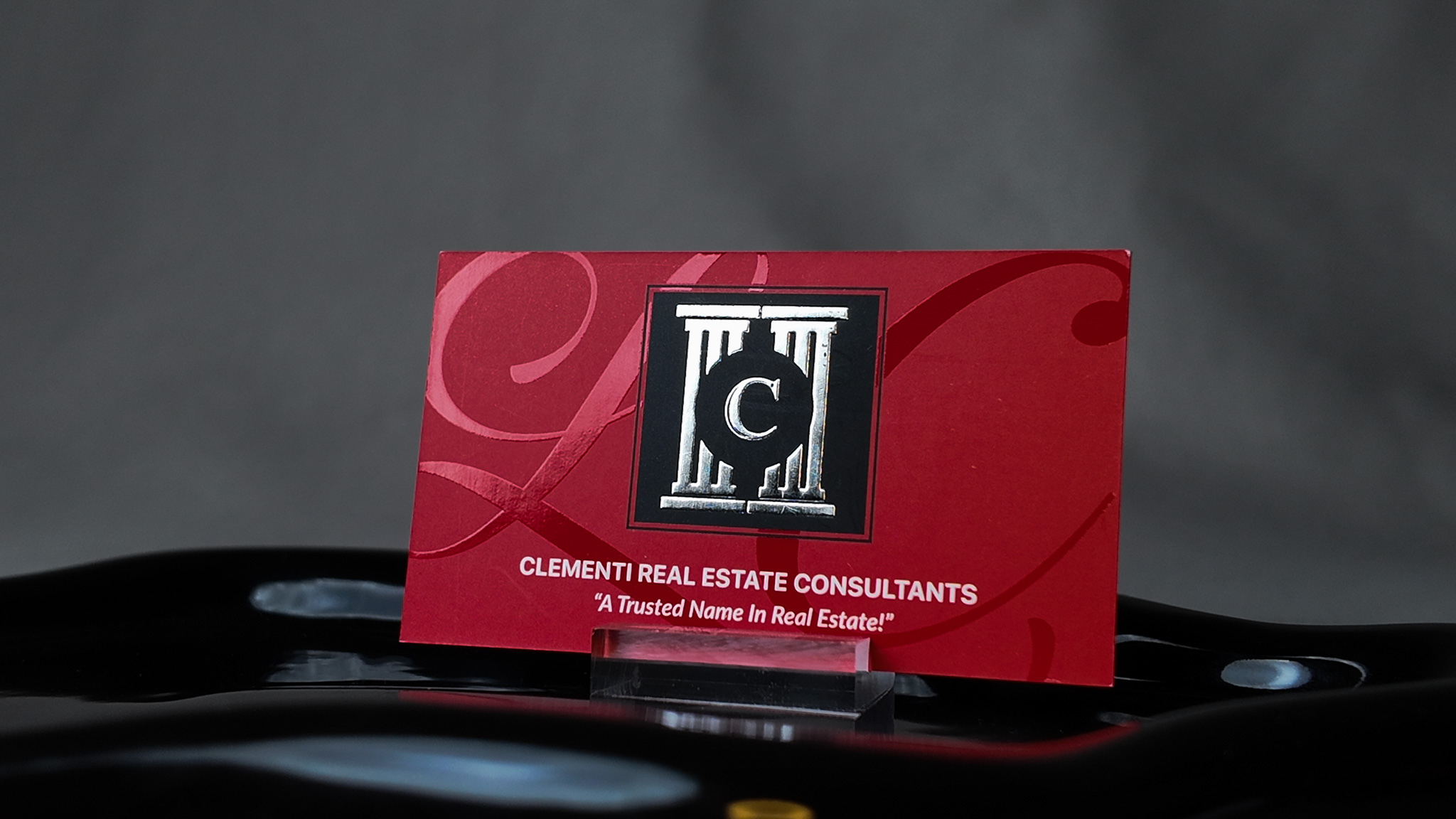
The kitchen counter after a listing appointment. This is where competing agents’ cards land side by side. The card that stays face-up, flat, and unbent is the card the sellers keep reaching for.
The wallet or phone case after an open house. Meanwhile, a buyer pockets your card between three others. A card that creases or picks up oil from the wallet lining gets thrown out Sunday night.
The client folder for the next six months, or the next six years. Past clients refer. Their friends ask who they used. The card they pull out of the folder is the first impression your referral will ever have of you.
Real estate business cards are working objects. It has to survive contact. The specification that governs survival is weight — and the standard most of the industry uses is not enough.
The Card Stock Decision — Why 32pt Changes Everything
Most real estate business cards use 16pt glossy stock. 16pt is the same weight as a paperback book cover. It is the default because it is cheap to produce, ships easily, and meets the minimum definition of a business card.
SilkCards’ standard for real estate cards starts at 32pt with suede lamination — more than twice the weight, with a texture that communicates care before the name is read.
That difference is not a spec sheet abstraction. It lands in the hand immediately. Pick up a 32pt suede-laminated card. The hand registers it differently before the eye processes the name. That registration — the half-second between touch and recognition — is where the first impression actually happens.
I have handed thousands of business card samples to clients over the years building SilkCards. The moment a realtor picks up a 32pt suede card for the first time, the reaction is immediate — they stop talking, look down at the card, and turn it over. That pause is the entire argument for this specification.
What 32pt Suede Lamination Gives a Real Estate Professional
Weight that reads as care. Of course, clients do not weigh cards on a scale. They feel them. A card that feels substantial signals an agent who pays attention to the details clients cannot name but can feel. In a profession where listing appointments are won on trust built in the first four minutes, that signal matters.
A surface that survives. Suede lamination is soft to the touch and water-resistant. A glass of wine spilled on the counter does not destroy the card. A wallet does not scuff the surface. The card that was handed over last Tuesday still looks handed-over-last-Tuesday next March.
Structural memory. Suede lamination on a 32pt card means the card is both flexible enough not to crack and thick enough to stand upright in a cardholder without bending. It does not fold. The corners stay flat. The shape it was printed in is the shape it keeps.
Every other card at 32pt, from every other printer, uses uncoated mill paper above 16pt. That is the industry ceiling. Instead, SilkCards bonds individually finished 16pt layers into the full 32pt construction — which means suede, silk, or linen runs through every layer of the card, not just the outside. You feel the difference the moment you pick it up. This is what SilkCards calls the Silk Standard. Thick and finished — not just thick.
Finishes That Fit a Real Estate Professional
Texture, foil, and edge treatment are not decoration on a real estate business card. Each one does a specific job — and each one tells the client something about the agent before the first conversation.
Suede lamination is soft to the touch, matte under light, and holds foil with high contrast. It is the finish most likely to produce the reaction “I have not held a card like this before.” For the agent whose job is to own the room before the handshake, that reaction is the opening.
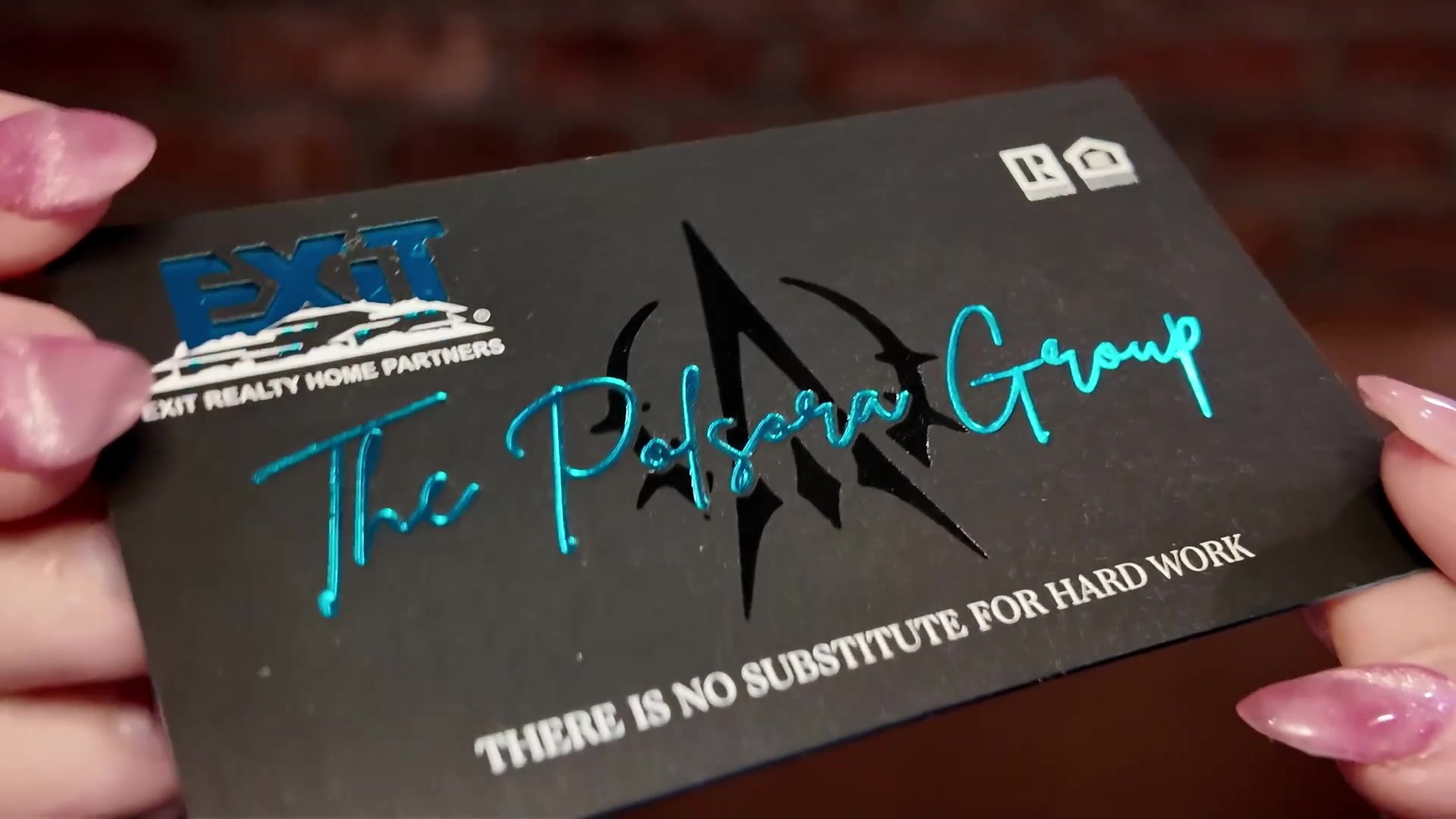
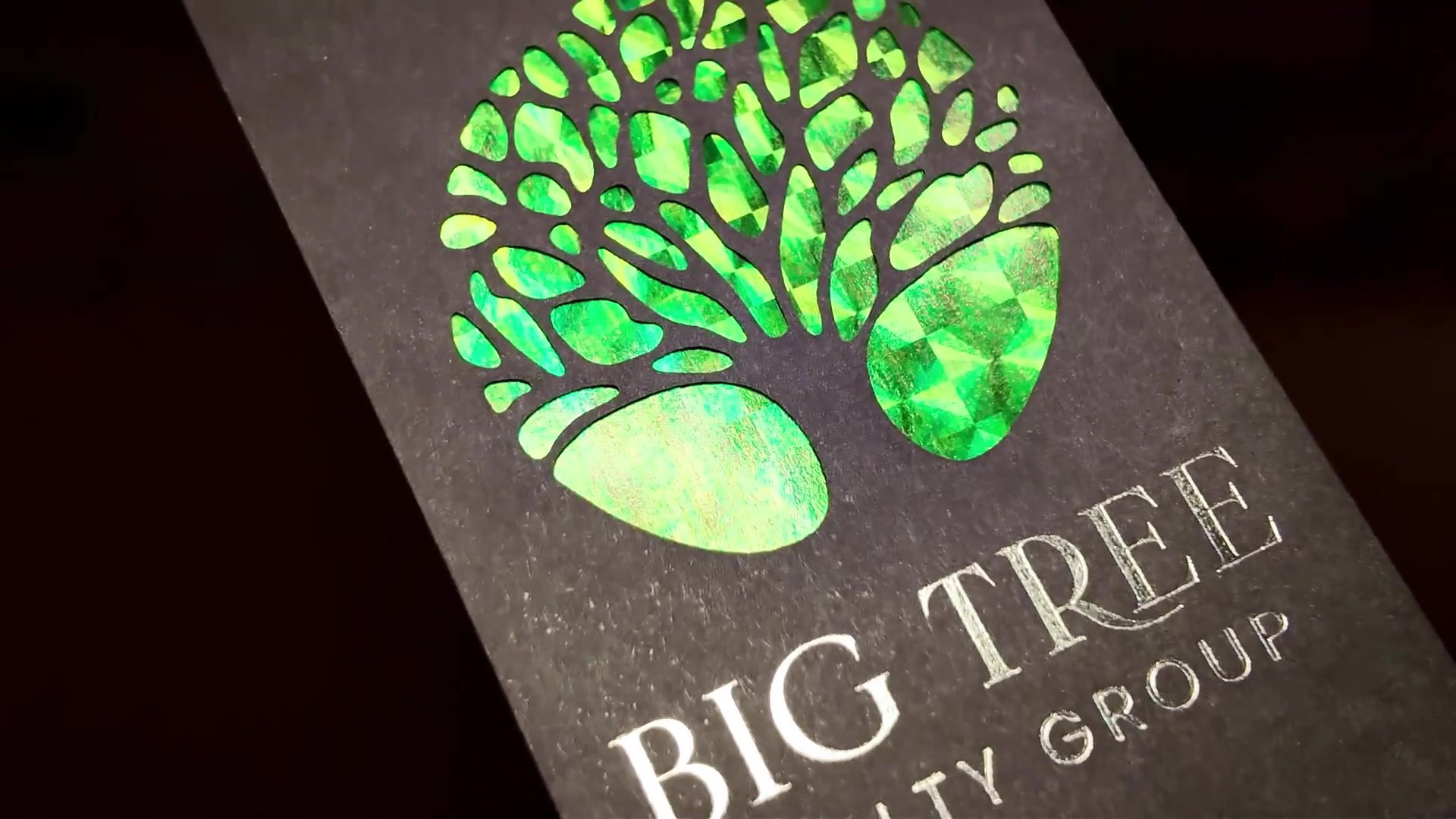
Foil stamping on the agent’s name or brokerage logo creates a different kind of memory than printed ink. As a result, on a matte suede surface, the contrast is immediate — the logo does not sit on the card, it rises from it. Gold foil on a dark suede card, silver on a bone-white suede card — each carries a different tone and signals a different kind of agent.
The Fifth Face: Edge Painting and Finish Combinations
Edge painting — a technique that applies color to all four card edges — makes a card identifiable from the side of a business card stack, not just face-up. This is what SilkCards calls the Fifth Face. A standard card has two faces. A SilkCards card has five: front, back, and three edges that carry color. In a stack of cards sitting on a kitchen counter, the only card that can be identified without being flipped over is the card with a painted edge. That is a competitive detail most agents have never considered — because no one has told them it exists.
The combination of the three — 32pt suede, foil on the name, and a painted edge — produces real estate business cards that survive every stage of the transaction. It is the card that clients keep long after the keys have changed hands.
The Digital Business Card Question
Every conversation about real estate business cards now includes the question of digital cards: NFC chips, QR codes, app-based contact sharing. They are a real tool. For a repeat client who already has you saved in their phone, a digital card is efficient.
But the listing appointment is not a repeat-client moment. It is a first meeting. It is a decision point.
At that moment, a digital card requires the homeowner to take out their phone, open the right app, tap the right button, accept the connection, and save the contact. It requires their attention at a moment when their attention is already being negotiated by four other agents. It requires a battery, a signal, and a mutual willingness to interact through a screen.
Why the Physical Card Still Wins the Listing Appointment
A physical card requires none of that. The homeowner takes it, looks at it, sets it down. Later, when the agent has left and the house is quiet, the card is still there. It does not time out. No permission is required, no app needs to be opened. Since there is no battery, it never dies.
The physical card also does something a digital card cannot: it stays in the room after the agent has left. A digital card goes home with the agent — in the agent’s pocket, in the agent’s phone. The physical card stays on the kitchen counter. That is its entire advantage. That is the whole reason it still exists.
Ultimately, the correct answer for a real estate professional is not one or the other. It is both. Give the client the digital share for convenience. Give them the physical card for the counter. But if you only print one set of real estate business cards, make them cards worth receiving.
What Realtors Say About Their Real Estate Business Cards
The difference registers before the card leaves your hand.
Frequently Asked Questions
The best business card for a real estate agent is a card that survives the listing appointment and the six months that follow. For most realtors, that means a 32pt construction with suede lamination, foil on the agent’s name or brokerage logo, and a painted edge. 32pt is twice the weight of the industry-standard 16pt and carries a tactile signal that clients feel the moment the card lands in their hand. The card’s job is not only to transfer information — it is to stay face-up on the counter after the agent leaves.
Realtors should use 32pt stock at minimum, and 32pt with suede or silk lamination where the competitive context justifies it. The industry default is 16pt glossy — the same weight as a paperback cover — because it is the cheapest viable business card. At 32pt with lamination, the card is flexible enough not to crack and thick enough to stand upright in a cardholder without bending. It also resists moisture, oil, and wear from wallets and client folders.
More Frequently Asked Questions
A realtor’s business card should include: full legal name as licensed, direct phone number, professional email address, brokerage name and logo, and real estate license number. Most states require the license number on any marketing material. A headshot and a one-line specialty (for example, a neighborhood or property type) are optional but often used. Keep the information hierarchy clear — the most important contact method should be the most visible.
Digital business cards are useful for repeat clients and recurring contacts, where the recipient already has the agent saved and wants a fast digital share. Physical cards are better at the first meeting — listing appointments, open houses, buyer consultations — because they leave something behind in the room after the agent has gone. The physical card stays on the kitchen counter. The digital card leaves with the agent. Most real estate professionals use both, but reserve a thick, finished physical card for the first-impression moments that decide the relationship.
A 16pt business card is roughly the weight of a paperback book cover. A 32pt business card is twice that weight, with measurably more rigidity and surface presence. At 16pt, most printers can apply lamination — suede, silk, or linen. Above 16pt, most printers switch to uncoated mill paper because their process cannot laminate thicker constructions. SilkCards bonds individually finished 16pt layers into a 32pt card, which means the lamination runs through every layer of the card — not just the outside surface. The hand feels the difference immediately.
The Card After You Have Left
The handshake is over in four seconds. The listing appointment is over in an hour.
The card is not over.
Your real estate business cards sit on the counter as the sellers pour a glass of wine and start talking about the agents they met this week. The folder on the buyer’s coffee table holds it for the next three weekends. Monday morning, when a colleague asks who that agent was, it is the card that gets pulled from the wallet.
Every one of those moments is still selling for you — or still failing to sell for you — and you are not in the room. The card is the only thing that still speaks. It should be a card your client wants to keep holding.
Feel the Card Before You Hand It Over
The difference in a 32pt suede-laminated card is not something an article can transfer. It lands in the hand, or it does not.
Request a free SilkCards sample kit and hold the same construction your clients would receive. No commitment. One card in your hand will explain the rest of this article in a way words cannot.