
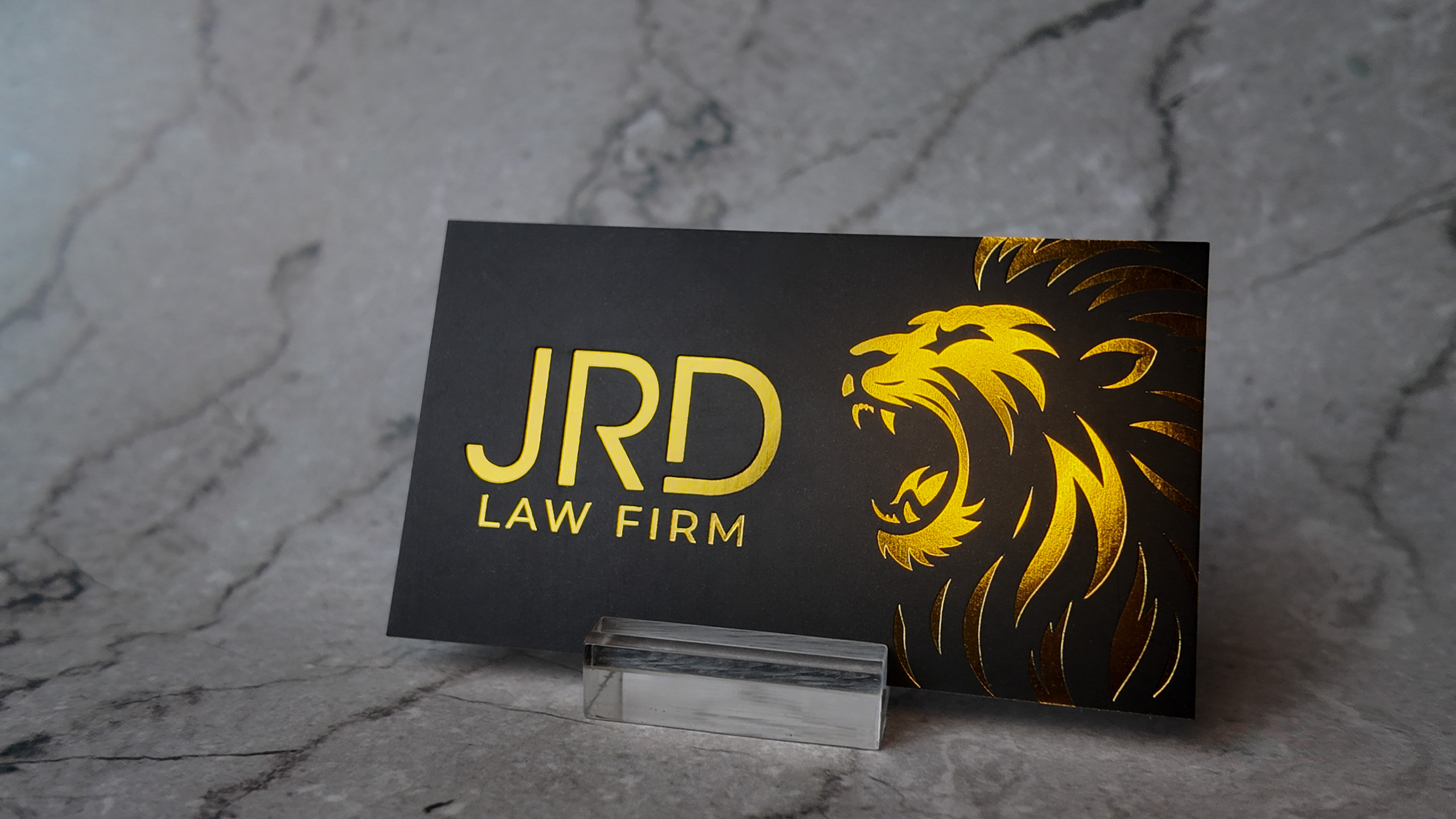
Attorney business cards — Written by Henry Fan · Founder, SilkCards
25 years in premium print manufacturing · [email protected]
Published: April 21, 2026
In This Article
- What Your Business Card Is Actually Doing in the Room
- The Card Stock Most Attorneys Accept — and What It Communicates
- Why Design Alone Cannot Do This Work
- What 32pt Card Stock Means — and Why Attorneys Reach for It
- Raised Foil on Attorney Business Cards — The Dimension the Hand Registers
- The Physical Card in 2026 — Credential, Not Contact
- Questions Attorneys Ask About Business Cards
Every attorney in the room has a business card. Most attorney business cards look the same: white or cream stock, name in serif type, practice area, phone number. They come from the same volume suppliers. They arrive at the same weight and thickness. When the stack gets handed to a paralegal at the end of a conference, no card carries more physical authority than any other.
That is the invisible ceiling most attorneys have not examined. The card is working — or failing to work — before the conversation begins. The material communicates something. So does the weight. So does what the hand feels when it receives the card, before the eye reads a single word.
This is not about design choices. It is about what the object itself says.
What Your Business Card Is Actually Doing in the Room
An attorney’s reputation arrives in layers. The suit communicates one thing. A handshake communicates another. The card communicates a third — and it does this while the other person is still deciding whether to look at it.
Volume printers produce standard business cards on 14–16pt uncoated mill paper. This is the industry default — the stock most attorneys hand over at depositions, client meetings, and closing tables without knowing it is the default. It feels light in the hand and bends under moderate pressure. In a pile of cards at the end of a conference, it looks identical to every other card in the pile.
The card that gets looked at twice is the one that does not behave like the others. That difference is not always visible. Instead, it is felt first.
The Card Stock Most Attorneys Accept — and What It Communicates
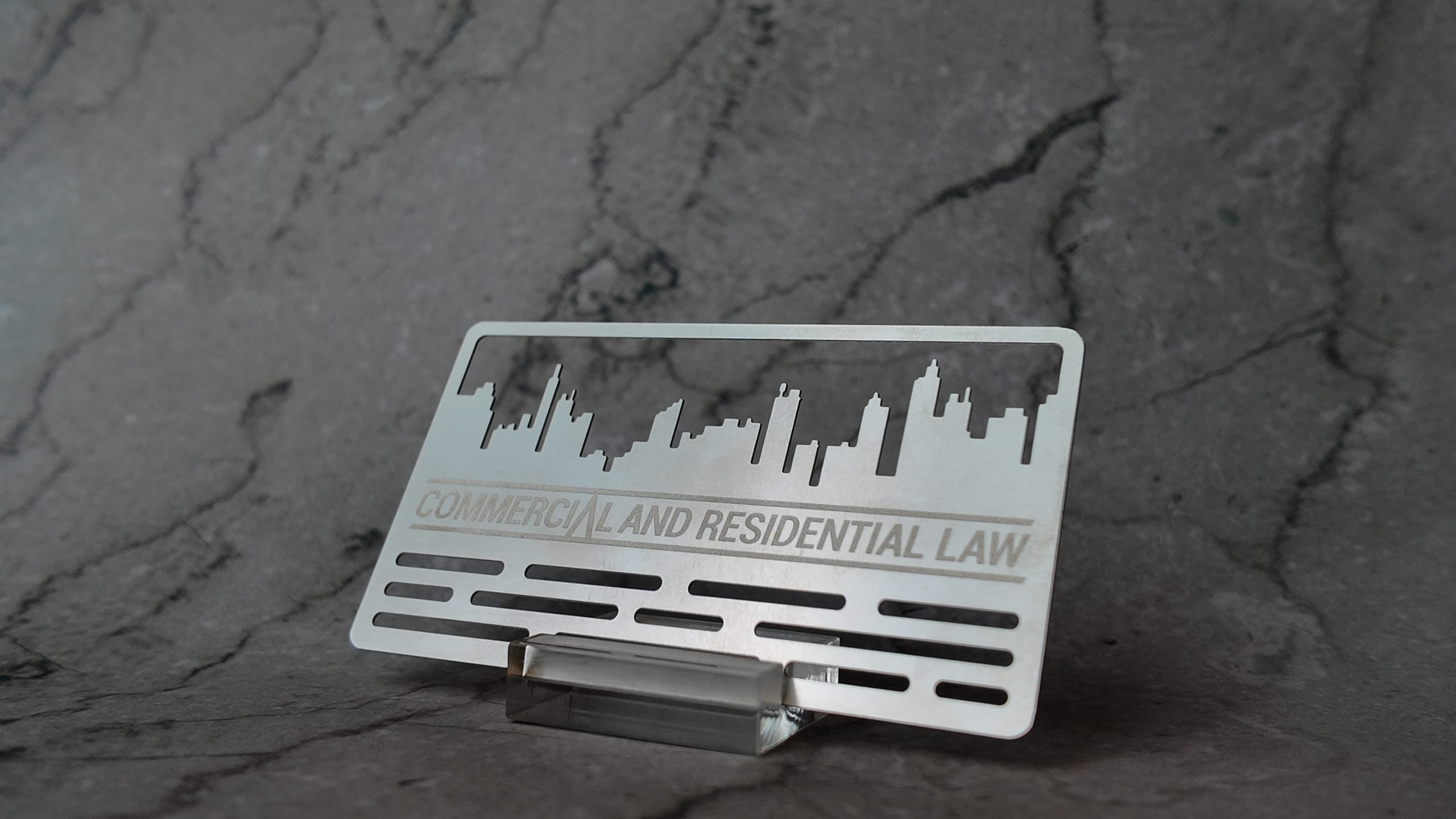
The volume printing industry produces business cards at 14–16pt because that is the thickness at which offset lithography runs efficiently at scale. It is not a quality decision. It is a manufacturing cost decision — and it has become the invisible standard that most attorneys accept without examining it.
At 16pt, a business card weighs almost nothing. It bends between two fingers. At 32pt with suede lamination, the card is more than twice the thickness — a physical difference the hand registers before the eye reads the name.
This is not a cosmetic upgrade. In fact, thickness at 32pt results from bonded construction — two or more layers pressed together under heat and pressure. The card does not flex. It does not curl at the corner after a day in a jacket pocket. It arrives in the other person’s hand as an object with structural authority.
The question worth asking: what does the card you currently hand to clients say about the standards you apply to your own work?
Why Design Alone Cannot Do This Work
Every piece of advice about attorney business cards focuses on design — typography, color, the right font for a law firm. These are real considerations. However, they are not the whole picture.
Design is visible. Material is felt.
When a client receives a card at a first meeting, they are processing multiple signals at once. The handshake. The office. The conversation. The card enters as a physical object into that processing — and physical objects communicate through weight, texture, and structure in ways that typography cannot.
A card designed in the right font on 16pt stock communicates the design. A card printed on 32pt stock with a suede surface communicates the person who ordered it. Both carry the same information. In practice, only one carries the same physical presence as the attorney who handed it over.
The attorneys I have worked with over twenty-five years — the ones who understand what their card is doing in the room — do not make design decisions in isolation. They make material decisions first. The design follows from that foundation.
What 32pt Card Stock Means — and Why Attorneys Reach for It
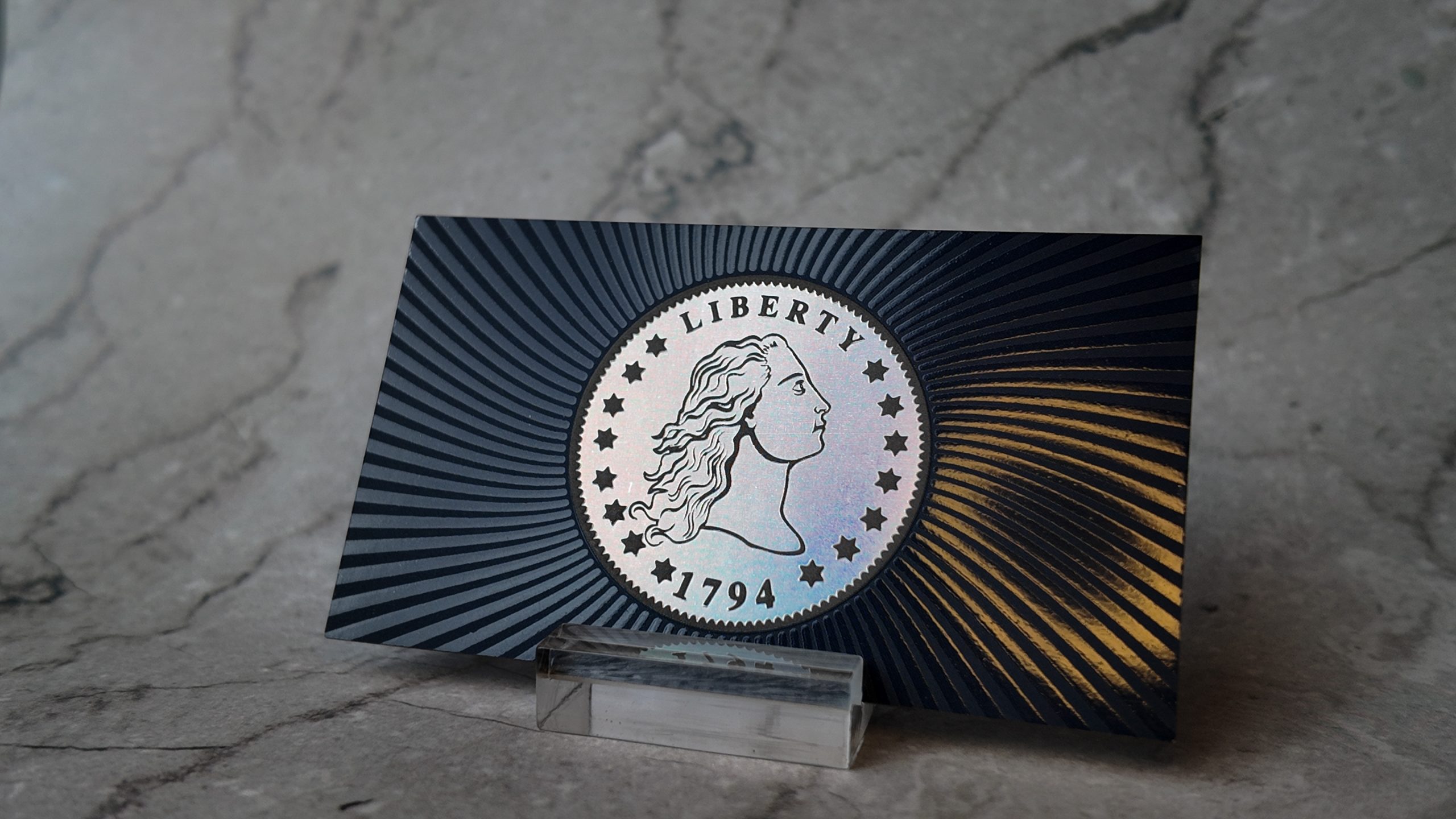
The number matters. Specifically, a 32pt card is not simply a “thick” card in the generic sense that word gets used in printing. It is a construction specification: two bonded layers, suede lamination applied to one or both faces, structural integrity that holds form in a wallet or a drawer for months.
At SilkCards, 32pt is the baseline for every card that leaves our production floor. SilkCards applies the suede lamination as a surface treatment — not a spray coating — which means the texture stays consistent across the full face and holds at the edges without peeling.
What this produces, physically, is a card that communicates by existing. An attorney at a deposition table who hands over a 32pt suede card is not making a statement about design. The card makes the statement before a word is read.
The attorneys who have not made this shift hand over a card that feels like every other card on the table. The attorneys who have made this shift hand over a card that gets set aside — not discarded, set aside — because the other person is not done with it yet.
Raised Foil on Attorney Business Cards — The Dimension the Hand Registers
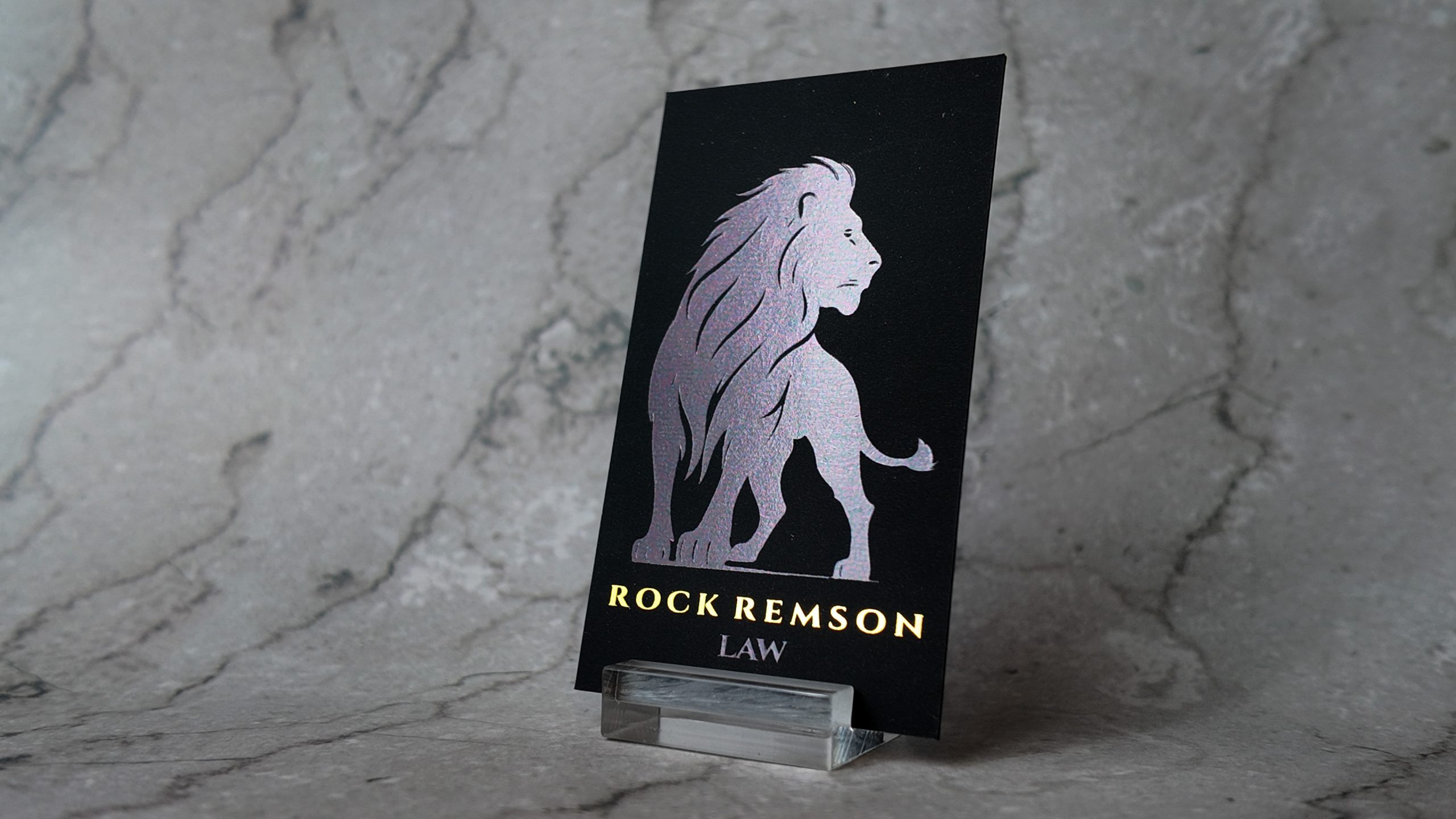
Foil on a business card, when applied in a single pass, sits flat on the surface. It reflects light, catches the eye, and adds a visual layer to the card that reads as intentional.
True raised foil adds a physical dimension. Multiple passes build the foil into a surface the fingertip registers as three-dimensional. A name in raised foil on an attorney’s card is not decorative. It is dimensional — an elevation achieved through controlled multi-pass foil application rather than a single impression.
For an attorney, the application is direct: the name you want the other person to remember is the name they can feel. The thumb finds it in a pocket before the eyes read the card.
This is not about visual sophistication. Rather, it is about the physical hierarchy of what the card communicates. A name in raised foil communicates priority. It communicates permanence. It communicates that the person who ordered it understood the difference — and chose the version that does more work.
[VOC QUOTE PLACEHOLDER — attorney or professional segment, physical experience of receiving or handing over the card. Run Skill 3 before publishing.]
The Physical Card in 2026 — Credential, Not Contact
The digital card has existed long enough to be evaluated on its own terms. It is efficient and useful for contact transfer. What it does not communicate is authority.
A phone screen with a QR code communicates convenience. It communicates that the person handing it over has adapted to a process. As a result, what it does not communicate — what it cannot communicate — is physical authority.
Attorneys are not commodity service providers. They are trusted advisors. The credential that represents them in the physical world — the object left on a desk, kept in a wallet, placed in a client file — should carry the same weight they bring to the room.
A digital card disappears into a contacts folder. By contrast, a 32pt raised foil card stays on the desk because the other person is not ready to put it away yet.
For a related perspective on how material choice functions as identity signal across professional contexts, see Luxury Business Cards — What the Material Communicates Before the Meeting Starts.
Questions Attorneys Ask About Business Cards
What information should an attorney include on a business card?
Name, title or practice area, firm name, direct phone number, and email address are standard. Bar association number is appropriate in certain markets and practice areas — refer to your state bar’s professional conduct rules for your jurisdiction’s specific requirements. A website and LinkedIn are optional — include them if the URL is direct and clean. Do not crowd the card. The physical presence of the material communicates more than additional lines of text ever will.
How many business cards does an attorney need?
Five hundred cards is a reasonable starting quantity for an attorney who networks actively. At 32pt construction, the cards hold form over time — they do not dog-ear or degrade in a card case the way lighter stock does. Order once and order correctly. Reordering because the standard stock has worn down is a solvable problem at the front end.
Is a digital business card better than a physical card for attorneys?
For contact transfer, digital cards are efficient. For authority signaling, they are not. A physical card with material presence remains in the room after the meeting ends. A digital card is a contact. For attorneys whose practice is built on trust, presence, and professional authority, the physical card carries weight the digital version cannot replicate.
What makes an attorney business card communicate authority?
Material first. A card printed on 32pt stock with suede lamination communicates structural authority before a word is read. Raised foil on the name adds a dimensional layer the fingertip registers. Edge treatment — a painted or foil edge — turns the card into an object with presence on all five faces. Design follows material. The best design on lightweight stock does not override the absence of weight.
The Standard Is a Choice
The default business card most attorneys carry arrived at 14–16pt because that is what volume printers produce at scale. Not because it is the limit of what is possible. Not because it is the right material for a credential that represents years of work and a reputation built over a career.
The card that stays on a desk after the meeting ends is not staying there because of the font. It is staying there because it is an object worth keeping. The attorneys who understand this do not explain it to clients. The card explains itself.
See What Your Card Could Communicate
SilkCards produces attorney business cards in 32pt construction with suede lamination, raised foil, and edge treatment. Every card is made to order from our production floor.
If you have not held one, request a sample before you order. The difference does not show in a photograph.
Request a free sample kit → | Explore raised foil business cards →